nothing to learn from beginning teachers

R – Okay, I’ll let you in on a pet peeve of mine. Ready? When you say “first or second year teacher”, many people automatically speak in their “oh, isn’t that cute” voice.  As they begin to have a conversation with one, they are thinking in their mind “I remember when I was a first year.” And then… they stop taking that new teacher seriously.

Since when did experience become the prerequisite ingredient to being a good teacher? I guess I missed that recipe somewhere. I’ll let you in on a secret: there are teachers that think and question analytically about what they do every single day by nature because they are GREAT educators, and then there are those that don’t. And experience has nothing to do with it.

There’s an article that was forwarded to me this week (I’ve linked it below). In it, there are some great points about characteristics of a teacher leader. Here they are:

Teacher leaders are researchers… Teacher leaders have an insatiable appetite for the next possible means to reach every child… Teacher leaders have technology skills to create the path through thousands of apps into handheld technologies for every child so learning can truly be individualized… Teacher leaders know how to create safe environments and have the capacity of heart to listen to all voices, even silent ones, and respond with open hands of support and minds of knowledge and ingenuity…. Teacher leaders have the capacity to view things from different perspectives and are not weighed down with the old way of doing things. 

Which of these qualities have anything to do with “years taught”?

When I began my career, and all through my 20’s and 30’s, I felt very strong convictions about many things around education and the role of music education specifically. Some of these were considered radical and, well, idealistic. For over 15 years, I had to cope with widespread perceptions that I hadn’t put in enough years of teaching to know what I was talking about yet. And believe me, I felt it. Would you believe that one of the greatest days of my life was when I turned 40 because I knew I’d never again have to deal with that perception? Since then these same ideas have been listened to and embraced because NOW I apparently – allegedly – know what I’m talking about… NOW I’m speaking from experience(?)…

HUH?

I’ll tell you what’s going on: Jarika, and Ashley Smith and Drew Albert and Jennifer Etter and Jeremy Milton and Jen Nash and Alyssa Anderson and Jake Sturtevant are music teachers still in the early stages of their careers. And I could write a series of blogs on EACH of these teachers, how they have inspired me, how they have CHANGED how I teach, how I view music education and how much I need to get out of my own way and just try new approaches that are outside of my comfort zone. EACH of these teachers have also had to confront the perception that they are too new and idealistic to actually know what they are talking about in any practical way. I’ve seen it first hand, and it is so wrong on so many levels.

What is wrong with us in music education that we think the youngest teachers can’t be our greatest role models? Yes, I understand, by way of “experience”, those of us who have been in the trenches longer have dealt with many things that a newer teacher may not have yet. SO? Maybe that is WHY we should be giving them more attention than those who have been teaching longer! Maybe their knowledge – because they are already great teachers – transcends anything that someone else’s “experience” can teach us! Maybe they are approaching music education from an angle that appears idealistic to the rest of us because OUR way of doing things is the problem and NOT their ideas?!!!

Do I have a chip on my shoulder from the way I felt I was perceived earlier in my career? Yes. Sue me for it. Will I ever be a hypocrite enough to be guilty of the same with regard to beginning teachers as I approach them throuout my career? I hope not. I really wish someone would pass a law that says no one over the age of 30 is allowed to hold any leadership position, guest conduct or be hired as a clinician. I have a VERY strong conviction that amazing, cool things would result. Are there veteran educators who are still exceptional at what they do, who we should still be engaged with and utilize as our ongoing mentors to an even greater degree every single year they teach? Of course there are. That’s also not my point. I just wish more educators would embrace the educational mantra of “unlearning the irrelevant” with regard to their approach to beginning teachers. Can you identify a newer teacher in your region who you haven’t reached out to yet? I’m not talking about introducing yourself or saying “hi” to at District Festivals, I’m talking about reaching out to them and making the time to engage them in meaningful dialogue around our wonderful profession. Can you? Do so. You won’t regret it.

Teachers As Leaders

img_6090

Posted in Etcetera | 6 Comments

lessons from my sports legends, part 2

R – There are two more things that immediately come to mind when I think of Larry Bird, Carl Yastrzemski, Dale Earnhardt Sr and Tom Brady.

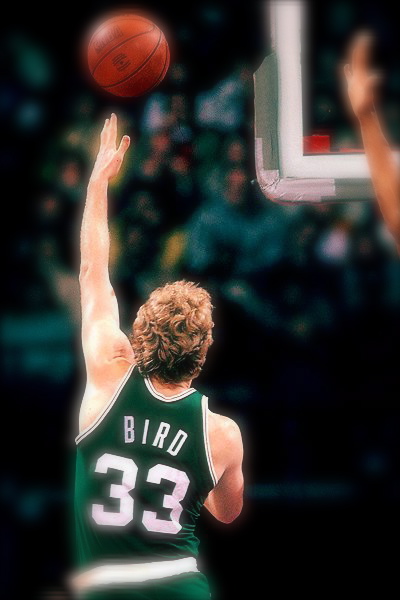
3) Work hard at getting better; work hard all the time. Yaz was in his mid 20’s, had won a batting title, and was the captain of the Red Sox when the winter of ’66-’67 came along. He decided that he needed to get stronger to hit the inside fastball. So he went into a strict training regiment over the winter with Hungarian trainer, Gene Berde. Yaz said that after the first day of working out, Berde just laughed at him and said, “You’re a major league ball player?” But Yaz was the one laughing when the season began and he proceeded to win the triple crown and resurrect baseball mania in Boston that hasn’t let up since. Larry Bird was the same way, perhaps even more so. As the offseason of 1985 began, Bird was coming off his second straight MVP season, and he had finished second in the voting the nba_g_lbird2_400previous three years too. His response? To work on shooting with his left hand so the opposition really wouldn’t know what was coming! Are you kidding me??? Inspiring. Honestly, I don’t know if I could ever have that level of conviction about getting better at my professional craft. But my sports legends remind me that I need to try. I am scared to death that my level of self discovery and self improvement will diminish as I continue through my career. Icons like Yaz and Larry Bird are examples that no matter your age (Yaz was hitting .323 at the all star break in 1983 and had started a game in center field… just weeks before turning 44 years old), your experience, your laurels, your abilities, it is irrelevant the moment a new year begins. You are impacting a whole new group of people or a group of returning people in a whole new way. There are SO many opportunities for professional development, books to read, colleagues to learn from. It’s inconceivable to me that if Larry Bird was a music teacher, he wouldn’t have spent EVERY summer and EVERY school year constantly evaluating his skills, doing whatever it took to get better at his craft.

4) Care… and not just when people are looking. Dale Earnhardt was killed on the last lap of the Daytona 500 in 2001. His legacy to the sport is perhaps the greatest in the history of NASCAR. But what came out in droves when he passed away was the endless telling of stories of things he did behind the scenes for others and for his sport. On many occasions he donated time and funds to charities and individuals without those things making it to the press. He’d take the fall and the heat when things would go wrong for others. He made it a habit to empathize with other people, and it didn’t matter who knew. This isn’t bad advice for all of us in music education, especially in tiny northern New England. We need to continually care for and watch out for one another. It’s easy to walk up to friends at District or All-State Festivals and catch up… less so to walk up to a complete stranger, introduce yourself and ask about that teacher’s program. Following up by keeping in touch and asking if there’s anything you can do for them. It is easy to get the auditioned choir or the top band into a rehearsal and enjoy their work… but does the same happen to an even greater degree when the lower level ensembles or kids walk in? Checking in on your top students is one thing, checking in on the students who are a thorn in your side, apathetic or going through the motions is another. I would argue that the latter is a greater need: if we aren’t making the “at risk” students our highest priority, what are we really doing here?

As I said in part 1 of this, I am not a hero worshiper… every one of these four personal sports legends were humans with imperfect lives who, like everyone, had some questionable decision making and actions along the way. I’ll leave the worshiping thing to my faith. No, what I love about them is that they were imperfect humans, showing everyone – exemplifying – outstanding characteristics that we could all learn from while enjoying their greatness in their sports. I love reading about them, hearing about them, talking about them. And learning from them.

Posted in Etcetera | 3 Comments

lessons from my sports legends, part 1

R – My guilty pleasure in life – and I am painfully aware that this being the case reflects the necessity of my needing to lead a more interesting life – is listening to WEEI Sports Radio on the way to and from school each day. But I do so by listening to archived interviews with sports writers, coaches and players of all the major professional sports teams in New England. There are specific regularly scheduled interviews I particularly love to listen to each week. Among them is the Monday morning chats they have with Tom Brady. I was listening to his interview earlier this week and he talked about a number of things that reminded me how much I have taken from my favorite players over the years. My four favorite sports legends in my life have been Carl Yastrzemski of the Red Sox, Larry Bird of the Celtics, the late Nascar driver Dale Earnhardt Sr. and quarterback Tom Brady. Each is/was unique to their sport, but there are common threads among them as well. More significantly, those threads transcend athletics. I was thinking on the way into work on Tuesday that connecting these threads to what we do as music educators might make for a fun blog post or two (or three), so here goes! Interestingly, it is not a stretch for me to make these connections… these have been basic lessons for me in my career, and my life. I am not into the hero worship thing (there is a difference), but what I have taken from each of these four during their careers has been very entertaining and very inspiring.

1) Watch and learn. TB was asked that since his boyhood hero, Joe Montana, had a chip on his shoulder for being a 3rd round draft pick (instead of a 1st), how should Brady feel about having being a 7th round pick? “Well Montana should have been picked higher, he was that good!” A great reply, which alluded to the fact that Brady believes he was picked right where he should have been, based on how good he was at the time. Then he talked about how he consequently grew and developed by carefully watching others and receiving their tutelage. He talked about the quarterbacks he was a backup to, he talked about the quarterbacks who were backups to him. He talked about all sorts of players he had been around. He even talked about loving watching the playoff games last weekend on TV because he learns so much from watching the other quarterbacks… still! The lesson here is simple: we all can learn from those around us. It isn’t relevant how long they’ve been around, what their roles are, whether they are on your team or not. This approach to what we do day in and day out in education is so important. We all can be better at what we do, but we don’t have to reinvent the wheel. Our colleagues offer so much to learn from. Whether it’s me talking to Jarika about the latest vocal pedagogy idea she’s come up with, observing Heidi Corliss working wonders with a non-auditioned chorus of teenage vocalists or just watching Bob Russell conduct for even 5 minutes, I am a different rehearsal technician and conductor next time I get in front of a choir. I’ve blogged before about how much better a choral conductor I am every time I watch a band rehearsal. Tom Brady said a mouthful when he talked about he grows because he learns from watching everyone he comes across; learning something from each of them.

2) Fundamentals, fundamentals, fundamentals. Randy Pausch in his “Last Lecture” (if you have never watched this, you must reserve an hour and 15 minutes to do so) alludes to this very point. But to hear Tom Brady say a few years ago that he devotes at least as much time to training camp fundamentals, if not more, than he did when he was younger, well, wow! He is bound for the Hall of Fame, arguably the greatest quarterback in the history of the game, and he devotes more time to practicing the fundamentals than he did when he was younger. And Larry Bird, the best free throw shooter in the NBA, practicing his free throws hours after he just finished playing a game? In our society, there seems to be a prevalence of, “I can change my routine once I’ve paid my dues”. I’ve seen this mindset carried out in our culture and society over and over again, and so have you. The refreshing message here is that the only “dues” that will ever really matter are the day to day requirements of being the best you can possibly be – and doing what is fundamentally required to make that happen over and over and over. And over. Repetition. Basics. I have neglected this advice FAR more often than I am proud to admit. The most recent reminder was an unconscious flip; a “curl” that I inadvertently added to my conducting pattern this past year. I was mortified when I saw videos of my conducting at the MSYM summer choir I direct, realizing that I had allowed a lazy habit to enter into my craft. I’m not being overly dramatic by saying that. I want to be proud of the work I do as a conductor, and I wasn’t when I saw what I was doing. Fundamentals. At age 47, aren’t I way past the point of needing to be concerned about my 4 pattern? Nope. That bad habit creeping into what I was showing my choir? Fundamentals. I need to always keep them fresh. We all do. And doesn’t this likewise translate to rehearsal technique, piano skills, listening skills, analytical skills, interpersonal skills, curriculum development, assessment strategies, etc, etc, etc…. ???

i

Posted in Etcetera | 3 Comments

stephen smith and peter pan

R – In my last post, and a few others as well I believe in the last year, I alluded to my KSC sophomore education professor, Stephen Smith. I could write a book on the lessons he taught his students, and he is more responsible than anyone for the type of educator I’ve tried to be. Two days ago I was honored to guest conduct a wonderful High School choral Festival in New Hampshire… it was formed 9 years ago with specific growth goals in mind for the students, a truly student centered event. As I reflected back on the day on the drive home Thursday night, I thought often of Steve. In retrospect, the day ended up being a microcosm of what Steve told us we should always be trying to do as educators. Educators of ANY discipline or subject area. He told us to be like Peter Pan.

“Bring your students to a different and exciting world.” Any honors festival begins by bringing diverse people together in a new environment. That much is a given. But that environment will dictate the success or failure of the event. I really believe that. The students are already outside of their comfort zone being around so many new people… what is the teacher going to do to turn that environment into a comforting, welcome one? I think that needs to constantly be reassessed by every teacher in every classroom every single week of their entire careers. Providing students the opportunity to interact, laugh with each other, giving them the opportunity to see what positive things each person around them brings to the table, that’s all pretty essential stuff. But it’s a tap dance though, because doing so runs the risk of loosing the student’s focus and concentration too. Doing one without loosing the other occurs through trial and error and constant practice on the part of the teacher. I will never be able to overstate the importance of finding this balance in the classroom. Steve knew what he was talking about here… and developing a classroom atmosphere that is comforting, engaging AND focused is a lifelong goal of any worthy educator, especially in music where requiring the student to perform in full view of their peers is a daily expectation.

“Be who you are.” The demeanor of the teacher can take many shapes and forms too, and I’ve seen successful classrooms with conductors who are complete goofballs and others who are very stoic. I have a conviction that either way, it’s only effective if the teacher is wearing their personality on their sleeve. If it’s contrived, the kids will know it! There is no one smarter than a teenager (I will always believe that) and their BS-ometer is fine tuned and well crafted. If they see a teacher who isn’t being authentically themselves, the kids will see right through it and any sense of trust is out the window. In the story of Peter Pan, Peter was exactly who he is, and the others gravitated to that. Not a bad lesson to remember. The problem here is that, to a degree, this requires you as a person to become vulnerable in front of them. If you are going to be authentic, then the students will necessarily see you. I don’t believe there’s any way around that. I have seen some colleagues over the years turn their classes into forums to discuss their own personal lives – that is not what Steve was talking about (and those colleagues should have been fired), nor does it mean allowing students to become your friends, et al. I know the difference and so do you. Steve simply communicated that, within all professional parameters, being an effective teacher means putting yourself out there as you are, warts and all, serving by example that it is okay to do so. How many times have we heard, “we want you to be yourselves”, said by someone who isn’t?

“Cause them to grow.” In a safe environment, get the students brains to hurt. Get them to go outside the 9 dots. In a guest conducting scenario, I love challenging the students with choral concepts that require them to rethink their own beliefs and perceptions about choral music. The simplest points such as, “Why do we inherently equate dynamics with pitch?” “Why, when I asked for better diction, did you sing the vowels louder?” “Why do we inadvertently equate tempo with dynamics?” Singing higher notes quietly and lower notes loudly in warmups, singing with pianissimo vowels and forte consonants, singing slower loudly and faster quietly… it requires the singers to become analytical, and they grow. Even in a one day festival I mess with the singers tone a LOT. I do a number of different things that requires them to think pretty deeply about their tone and how they should develop theirs. These are just skimming-the-surface examples, but what is going on in the classroom or rehearsal that causes the students to be different when they leave than they were when they arrived? I have a very strong conviction that merely “teaching them more facts” doesn’t get it done. When I began my career, I used to believe that the most important thing in guest conducting is getting the right notes and rhythms in place so that the kids can really enjoy the concert. I don’t believe that any more. Yup, they had BETTER musically perform the correct notes and rhythms and dynamics and phrasing and articulation, doing so with impeccable posture and breathing technique while healthily producing a mature, rich vocal tone in correct proportion to the others in their section and the entire choir, for the purpose of bringing back to life the musical intent of the composer!!! 🙂 BUT, that is not going to be of lasting value to them as much as getting them to rethink things and grow as musicians and as people. I love all the challenges of guest conducting, but accomplishing as best as possible the former goals while making that latter one the highest priority is the greatest challenge of all. And every ounce of this is likewise true in my own classroom.

“Let them go.” The last thing that happens to Peter Pan is that he has to let those he has grown to love go. And that happens all the time to us as teachers, doesn’t it? But the beauty of it, and the healthiest thing about it, is that’s the whole point to it all. The overused statement of, “catch them a fish or teach them how to for themselves” is applicable. I used to take this too far, and I would emotionally shut myself off from my alumni, because that’s what I felt I was supposed to do. It is a phenomenon of the last 6 or 7 years that I have opened myself up to keeping up with them after they go and it’s been one of the great joys of my life to do so. But Steve’s Peter Pan lesson still applies. If we as music educators are going to do right by our students, we need to let them go. And if we did our job right, they – and we as teachers – will be prepared to have that happen successfully. I always want to be here and available for my alumni, but having them keep in touch doesn’t negate one ounce what Steve was driving at. Are they prepared to move on as a person and/or musician they weren’t when they arrived? In a guest conducting scenario, this – to me – is the litmus test of if the festival was even worth holding or not.

Guest conductors always get no shortage of kudos… they’re nice to hear but I always reflect on a quote I reference often by singer/guitarist Lindsay Buckingham, “If you’re any good at all, you know you can be better”. I could write a novel on all the things from Thursday I wish I had done better both in rehearsal and in concert. But Steve wasn’t about us as educators being perfect. It was about going after our true goals as educators as best as we could. And that translates powerfully to our own classrooms. We do NOT get the rounds of kudos for what we do day in and day out. But what we provide our students is far more valuable than what a guest conductor could ever provide, because we see them daily. And remembering what Steve taught me, including the lessons of Peter Pan, has helped me immeasurably. And it all works. I know this first hand. Because, after all, Steve was my Peter Pan.

peter-pan-1-b1124

Posted in Etcetera | 7 Comments

thank you

R – I’ll tell you later why I’m writing this post this morning, but first I want to allude to two former teachers who had a profound impact on me.

The first is Stephen Smith, my Intro to Education professor my Sophomore year at Keene State College. It would take a novel to adequately portray the type of person and teacher he was, much less all the lessons he taught me. He was one in a million, and he made a profound impact on me. His definition of education for example was, “to get students to unlearn the irrelevant”. I’ve since based my entire foundation of educational philosophy on that wonderful premise. He told stories that captivated us, and related them to concepts I have never forgotten as a result. He is the one who taught me that being a successful teacher means being a bit like Peter Pan: bringing students into a magical world where they are fostered and challenged, where they mature and grow as people… and have the most wonderful time doing so in the process. He told us to be more, and I’m not making this up, to be more than a “dinosaur fart”… don’t be a big deal for the moment only to fade away. Be someone and something of lasting and permanent value. He taught me to look beyond the obvious and to “eschew obfuscation” (if you haven’t heard that phrase before, google it… it is in vogue to use the phrase now but trust me, in wasn’t in the years pre-internet). Going outside the 9 dots. In short, to a unique degree, he molded me into the teacher and person I have since tried to become. As a guest conductor, as a guest speaker, I have never spent time in front of others without mentioning at least one “Steve Smith story”.

The second is my Junior year voice instructor, Louis Burkot. Prior to working with him I had two years of virtually no success as a voice student despite the hard work of a really fine voice teacher I had been working with up to that point. There were many pieces of vocal pedagogy I just wasn’t able to put together or apply to my own voice. I was convinced that my speaking voice was also my singing voice, and I just couldn’t make the connections to the work that was being done with me. Well Louis took me on as a student (as a challenge I’m sure!) and knew exactly what needed to be done. Our very first lesson, he made me speak with absolutely no resonance at all. At ALL! Then he had me sing the exact same way! I knew he was crazy, and the sound was awful, but I went with it. And went with it some more… he kept this up with me for six full weeks of lessons. But then in the middle of October he finally said, “okay, now bring the other (resonant) part of your voice back in but keep what we’ve been working on”. And so I did… and for the first time in my life I sang with a rich, mature and vibrant tone. It worked!!! But I thought I was simply being “fake” and told him so; it wasn’t my voice. I’ve never forgotten his response: “Oh yeah? Well, whose was it then?” 🙂 That moment changed my life, my thinking about my voice, my thinking about vocal pedagogy and how to teach it. In the years since, I have shared this story with every single choir I’ve ever worked with – my own, summer choirs and honors choirs I’ve conducted. And every single time there are singers who get the same lightbulb “a-ha” moment that I had. Louis transformed me because he is a truly a master teacher, taking me where I was at and elevating my craft to the next level.

Here’s why I’m writing this blog post today. I have an alumni who is now singing for Louis Burkot at Dartmouth College. It reminded me that I have never, ever thanked Louis for what he did for me. And he clearly had no idea how many voices/lives he’s indirectly impacted via the story I always tell of his work with me in the Fall of 1985. He deserves to know. I finally e-mailed him last week and though I’m embarrassed to admit that it took me 27 years to do so, I’m happy that I finally did. Steve Smith on the other hand, I’m unable to. Steve died 5 years ago of ALS. I remember hearing about when Steve first got sick – from another classmate in that same Sophomore class no less –  and I just knew he would be okay in the end. I couldn’t contemplate the idea of his not being okay or his not being around. E-mailing him was something I’d eventually get around to doing, “when I had a few minutes”.

And I never did.

I am blessed to have had many wonderful mentors in my life… Dan Graves at Woodstock Academy, Carroll Lehman, Bill Pardus, Doug and Jean Nelson at Keene State, Lori Routhier in Vermont, Dennis Cox at UMaine, Joan Hamann with MMEA and Marv Crawford throughout the time span just to name a few. And I’ve been grateful for the opportunities to let them know face to face thankyou-chalkboard-largewhat they’ve meant to me, although they’ll never fully appreciate the depth to which it is true. But if there is a teacher in your formative years who made an impact on you who you have not been in contact with, my hope is that, especially during this season, you will make the time to contact them and thank them. And putting it off really shouldn’t be an option. I’m not saying this as someone who is good at following through at things like this, quite to the contrary. I’m saying it as someone who too often hasn’t… but has been thinking recently about how important it is to do so. Be that person who thanks a teacher from your formative years; be that person who articulates gratitude where gratitude is due to them. And be reminded that the blessings of our lives come in all shapes and sizes, and that the people who provided them are worthy of our recognition and “thank you”.

Posted in Etcetera | 2 Comments

grades

R – I hate grades. I love assessing, I don’t mind “grading”, but I hate grades. What’s the point? “I got a B”. SO? What in the world does THAT mean…

As school teachers we are required to give grades for the work that our students do. I think I’ve made it abundantly clear how I am biased towards standards based assessment which eliminates grades completely. But even at schools that incorporate standards based assessment, and especially so at the secondary level, teachers are still usually required to eventually transfer standards scores to grades (which defeats the point… thanks a million, post secondary schools for mandating grades). My take on this is that a) this is a shame, b) if you are required to give gradesgrades, make sure they have “teeth” in them. Be sure that you – and your students – can clearly articulate the distinction between an “A” and a “B”, and between a “B” and a “C”, and so on. ESPECIALLY when it comes to music classes which can otherwise easily be perceived as non-academic (which defeats us all… thanks a million, the handful of music colleagues who don’t believe that students should be assessed).

Next month when I submit my grades for my classes, I am going to have to transfer my standards over to grades. When I do so, the process is straight forward. If a student received all “4”s, it’s an A+ for the term. If it was an even combination of “3”s and “4”s, it’s an A for the term. Virtually all “3”s? A-. In essence, an A in our school is looked at as exemplary work. Well, if a student meets every single expectation I had for them (a “3”), is that not exemplary work? If I made all 3’s a B, that student would be ineligible for the honor roll… but yet they MET my expectations! How could I possibly justify that (“hey, you met every expectation I had for you but that wasn’t good enough…”)? Of course, in the end the question ends up being rhetorical because the answer is dependent on opinion, which actually makes my point about the futility of grades to begin with.

Now for the students who have earned at least one “2” by the end of the semester. This is where the transfer to grades becomes interesting. With Music Theory, it’s an automatic “F” for the semester. Period. The good news? Because the students know that ahead of time, they re-take any and every assessment they receive a “1” or a “2” on until they show proficiency in that standard, so that by the end of the Semester, they all have received all “3”s and “4”s in each and every single individual academic standard. The net result? Every Theory student who passes my course is granted at least an A-. And I know what you’re thinking, “but if everyone gets an ‘A’, that isn’t fair and it shows that your class is easy…”

Even though I acknowledge this statement to be an unfair generalization, mark my words, there are only two scenarios by which the vast majority of your students receive an “A”: the first is due to an absence of rigor, the second due to a predominance of rigor in a course that requires proficiency in articulated standards to pass.

How about my choirs? If a Chamber Singer earns more than one or two 2s, they are dropped from the course, due to a failure to commit to the minimum expectation I have for them day to day and concert to concert. And for my non-auditioned choirs, every 2 or 1 in the daily assessment of working towards the standards, or an end of the term standard score of a 2 or a 1 earns anywhere from an F to a B+. It depends on the standard, the number of 2s or 1s, daily work towards meeting the standards, and so on. A 2 in standard i., “Sings with dropped jaw and light bulb space” cannot be treated the same as a 2 in standard c., “Sings utilizing correct solfege or numbers” or a 2 in standard j., “Engagement”. Is this still subjective? Yes. Is it ten times less subjective than what I used to do for my first 20 years of teaching? You betcha.

Grades. I still don’t want to give them. But when I do, (A.D.D. moment here, I can’t say that phrase without conjuring up the image of the Dos Equis Most Interesting Man commercial) I do everything I can to ensure that they have teeth behind them, validity, and direct connection to what students are being held accountable for in an authentic way. The connection to standards and standards based assessment makes this possible for me. I enthusiastically recommend considering at least a variation on the same. I don’t pretend to know what I’m talking about here as any authority on this topic any more than any other blog post I’ve put out there. But this is where my head is at right now. And as is also the case with every other post I’ve written, I’m more than open to other thoughts that could get me to shift my thinking. This is a complex topic with no hard and fast rules to it.

A great blog reflection on grades

And though my premise is that there is no substitute for individual accountability, my instrumental colleague at York Middle School, Jimi Neel, showed me this great video last year which drives home the point that we are always aiming our ensembles toward the highest level of proficiency.

Why An A is not enough

Posted in Assessment, Standards | 1 Comment

standards, assessment, blah blah blah… part 4

R – I have a strong conviction that standards based assessment in music begins as a mindset first and a series of actions second. If a teacher were to ask, “what should I do to make this happen?”, the answers come only after being intently analytical about the circumstances in play. For instance, individual assessment requires time. So, should this time be “in class” or “out of class” time? It depends. Should this be accomplished one on one or automated (computer)? It depends… and if computer, which is better: smartmusic or garage band or something else? It depends. Assessment of the individual during large group time is limited to things that can be readily observed. What should these items be? It depends. Your school is traditional grade based and you would need to translate your standards into letter grades… how should you do that? It depends.

What’s my point? Bottom line: communicate with others who are on the same journey and pick their brains. You have to. E-mail them. Call them. They are untapped resources for you… and that won’t change until you reach out. Attend professional development workshops that are offered around the state. Did you know there are now FOURTEEN different days of professional development STILL being offered in Maine for Arts Assessment alone, NOT including what will be offered at the All State Inservice Conference??? Check out the link below and attend one or two. Did you know there are ongoing Graduate courses being offered in Arts Assessment that also fulfills the state recertification requirement for taking one 3 credit college course? Check out the link below.

There are dozens upon dozens of options available for teachers and music programs that want to go down this road. And the “what” you do is not as critical as the “why” you are doing it. So dive in. Decide where you want to go with it conceptually and begin the process of putting together your building blocks. And have fun with it… allow it to put a microscope on how you teach, not to mention what you teach. And when you get past square one, no matter how it went, share what you did with others. We need to hear from you – really!!!

Professional Development in Arts Assessment

Graduate Courses in Arts Assessment

standards, assessment, blah blah blah… part 1

standards, assessment, blah blah blah… part 2

standards, assessment, blah blah blah… part 3

Posted in Advocacy, Assessment, Standards | Leave a comment

standards, assessment, blah blah blah… part 3

R – Implementing standards based assessment into a music program can appear to be a daunting task. But I have a conviction that it doesn’t have to be. In practice, standards articulate critical stepping stones in the educational journey of our students. It’s what we want them to know and be able to do. Is there a single teacher who can’t speak eloquently to what those goals are in their own classrooms? They can range from the formal curriculum goals to units of study to even the smallest pieces of our students’ educational growth. Here are some ideas for implementing standards based assessment in our music classrooms.

What do you want your students to know? Asking this question is not merely necessary for bridging into Standards Based Assessment, it’s a critical question to be asked for any music program that professes to academic in nature! The answers for every teacher vary, dependent on  three variables: 1. grade level appropriate expectations, 2. prior, accumulated knowledge base of the students, 3. classroom face time considerations. The Maine Learning Results provides a wonderful framework for the first piece, but can’t presume the impact of the second and third pieces. At the Junior High and High School levels you add a fourth component of specific course expectations. Consequently, it really is up to YOU to consider these factors and determine the appropriate answers to the fundamental question, “what DO you want your students to know”?

Articulate these learning expectations into language that your students and their parents can easily understand: STANDARDS! You can’t hit the target unless you can first see the target. Same with learning expectations. Make them simple and as easily understood as possible. This is where the Maine Learning Results or National Standards can be really helpful. Study the language in them… trust me, there is not a syllable of either document that is in there by chance. It doesn’t have to sound flashy or hip, it just needs to articulate leaning expectations. My YHS Choral Standards 12-13 for this year are really boring. They also work for me and my students… and that’s the point. Standards, articulated in really clear language, makes things infinitely easier for everyone, including yourself.

How many should you write down? As many as you can, or as few as you want! This is a brainstorming session on your part ONLY. The important element is the not the volume of standards you have, but the rather the independence of each. “Sing accurately with good tone” is not a standard. It’s actually two standards. Divvy them up… isn’t it possible to sing accurately with poor tone or to have a wonderful tone while singing inaccurately? Make each a clear stand alone expectation. THIS filter, more than anything else, will determine how many standards you come up with. But read on… you may not initially actually implement all the ones you came up with. As a matter of fact, I all but guarantee it.

Cross reference your standards with performance indicators from the MLR or National Standards. Do you see alignments with them that suggest additional standards you didn’t consider? Do you have standards that are missing in those documents but you can substantiate? The initial goal here is not necessarily to align with either document, but rather to give yourself a “gut check” with regards to the standards you are developing for yourself. As a professional in the field, it’s the right step to take. But conversely, educated professionals being completely dogmatic with regard to ANY document or approach is a pet peeve of mine. Know where you are in alignment and why, know where you are not in alignment and why, and move forward from there. You can’t do so without following through on this important step of cross referencing your standards against state or national documents first, which serve as tremendous road maps for us.

Categorize your standards. For me, it has been extraordinarily helpful (and revealing!) to divide these into the following categories: content standards only measurable on an individual basis, content standards that can be measured in a group setting, and standards that are social or civic in nature. I believe that standards in each of these three categories are essential in the grand scheme of articulating why instruction in our subject area is so important. But once you categorize your standards in this way, you will not only quickly see a very clear picture what it is you value most, but also how you will need to structure your assessment practices to adequately measure student growth in each (how cool is THAT???!!!). And to offer one more amazing reveal, you will be able to tell almost immediately if your curriculum actually aligns with your learning expectations and student outcomes (even COOLER!!!).

For each standard, develop an analytic rubric. This too can seem daunting at first, but if you truly understand what the learning goal is, you’ll also be able to articulate what varying degrees of accomplishment of that goal looks/sounds like. At it’s most basic core, that’s all rubrics do. In function, they have to be well written and very, very clear, but don’t make these more than what they are intended to be. By the same token, avoid at all costs the temptation to insert words such as “very” to delineate the difference between a “4” (exceeds the standard) and “3” (meets the standard) for instance. And hey, choices you have to make such as whether or not the rubrics will be on a 2 point, 3 point or 4 point scale? That’s up to factors such as what your school district is moving toward, functional reality of what you’re trying to do, and so on. Look at TONS of examples on the web for ideas and talk to colleagues in your region for their input. My belief is that, all things being equal, it is more time consuming to develop a 4 point scale, but worth every minute of the effort in that it forces you to be extraordinarily clear and specific, and it will be a piece of cake to transfer it someday to a 3 point scale if you choose to make that switch at some point. The same is not so true the other way around. One more thing: make your rubric brief! If it takes longer to read through every darn indicator than it does to apply it, uh, hello? 🙂

Tire to the pavement: select the standards you want to begin assessing. Go one term at a time, even one unit or lesson at a time. Select standards that require individual assessment. Select at least one standard that incorporates subject area knowledge so that they’re not all just social or civic. But most of all, incorporate only ones that are manageable and DOABLE! If you attempt to do it all and do it all at once, no good is gonna come of any of it. Keep it real… do only to ones you believe you have the time and resources to incorporate them. The YHS Choral Standards for this year constitute about 25% of what I really want to be doing. And that’s okay, it really is! I’m refining these while also developing strategies to incorporate more each year, even each semester. As for the ones that don’t get incorporated? Don’t loose them! You determined for yourself that these are standards that you value most for your students, so work diligently towards a day that you’ll be able to include many more.

You completed these steps? Congratulations, here’s just SOME of your rewards:

* you are able to your engage your non-music colleagues in a cross platform discussion around assessment practices and their ties to instruction.

* you are on your way to self-evaluating your instructional practices, your assessment practices, and your consistency in tying the two together.

* you will be compelled (trust me on this one!) to reevaluate what you do and why you do it on a nearly daily basis. If you checked out the pdf above of my choral standards for this year, did you notice standard d. is completely missing? Yeah, didn’t like it once I tried using it, so I ditched it and altered how I assessed standard c. instead. You’re allowed to do that sorta thing, and you’ll find yourself doing so!

* you are making the transition from “this is what I teach” to “this is what my students learn… and how well they learned it”.

* you have put in motion perhaps the most powerful tool you’ve ever had for advocacy (can’t teach certain standards due to time or facilities restrictions? NOW you can articulate that in a way that ANYONE can understand and see the value in!).

* you have a tool to now incoroporate authentic, reflective, OBJECTIVE evaluation of your PK-12 program.

* you will never see or hear your student’s work the same way ever again.

Game on! Start big or small, but start. Forget the fact that states all over the country, including Maine, are moving this direction for keeps. To me, it’s simply about this: it has the potential to transform how you evaluate what you and your students do while also positively impacting their experiences and learnings. Isn’t that motivation enough? Yet even MORE on all this coming soon!!! 🙂

standards, assessment, blah, blah, blah… part 1

standards, assessment, blah, blah, blah… part 2

standards, assessment, blah blah blah… part 4

Posted in Advocacy, Assessment, Standards | 4 Comments

standards, assessment, blah blah blah… part 2

R – Old model: what we teach matters. New model: what our students learn matters. That’s standards in action. But these two things are the same thing you say? I used to agree. I don’t anymore. Read on. I touched on some key issues in standards, assessment, blah blah blah… part 1, here are some reflections on standards based education and assessment as it pertains specifically to performing ensembles.

I went to standards based assessment about 5 years ago for a variety of reasons. One of the significant “ah-ha” moments in my career was when I formed a class at YHS called “Chorale” and the prerequisite was that this must be the first time you’ve ever sung in High School to enroll. I took a very rudimentary approach to those students and necessarily changed both the curriculum and how I taught it (and this is where Jarika taught me how to do so better…). I was assessing them on things such as note names, reading key and time signatures and so on – things that members of my regular chorus had already learned but that an amazing amount of newbies had not. The other difference was that I spent significantly more time in Chorale working on sight reading. In other words, Chorale was a music literacy class through which they also learned performance literature, Chorus was a performance class through which they also learned literacy. Well, wouldn’t you know it, by the end of the first term, my new kids were more functionally literate than my Chorus students. What is wrong with this picture? Plenty! Chorus was about what I taught (literature), Chorale was about what the kids learned (skills) and I was embarrassed that the difference in literacy between the two groups was so stark. Two years later, my performance ensemble offerings have now been completely revamped to be an amalgam of both approaches. Why? Because literacy AND performance skills are both non-negotiable “musts” for me. Do I perform fewer selections at my concerts as a consequence of my focus on literacy? Yup. Is it worth it? Yup. Literacy = applied skills = essential standards.

Both my sections of Chorus (Chorale has been done away with since now I teach all my choral students the same content with the same approach) took an assessment on key signatures earlier this week (YHS choral standard “e”) and the scores were all over the place. Benefit #1: the kids on the fringes quickly realize that they can not “go through the motions”. I have a lot of students who take Chorus as the path of least resistance to fulfill their music requirement (I have 90 first time singers just this first semester alone, and over half of them just for the credit). Guess who got “1”s and “2”s on their assessments? I could have predicted it too… when we went over the material in class, multiple times, those students didn’t take it seriously. But now they have til the end of the semester to bump that score up to at least a “3” or else they fail the entire course. Remember, grades are averages… you can BOMB a key signature quiz in traditional grading and still receive an “B” for the course if you ace everything else (“participation” grade anyone???). But not in standards based assessment and grading.  Benefit #2: the kids must demonstrate proficiency. The stories I could tell you from 2 years ago when underachieving Chorale students were coming in asking for help would blow your mind. To see them finally get a concept that they simply would have brushed aside if they were only given “grades” instead of standard scores (1 through 4) made my entire year. The same is about to happen in my choirs this next quarter. How do I know that? It’s already started. Four kids in just the last two days showed up in my office – randomly – and said, “okay Berg, let’s go over key signatures, I gotta get this”.

yessssssssss.

So Benefit #3: there is authentic student academic accountability. I have students enrolled in Chorus who are depending on a passing grade to receive their diploma. You don’t think they’re going to be doing everything they can to get that “1” or a “2” on their key signature assessment up to a “3”? I have kids who know if they fail this course that they will have to take another music course. You don’t think they’re at least as motivated to learn content? Again, this mentality does not occur with “graded” quizzes (grades: “what can I do to get my grade up?”… standards: “okay Berg, let’s go over key signatures, I gotta get this.”)! And having concrete standards that are identifiable and measurable? Benefit #4: performance ensemble courses get put on the same academic plane as courses in the other content areas. All of the sudden, “talent” has nothing to do with it. All of the sudden, the class is identified – by students and parents and colleagues and administration and community  – as academic. All of the sudden, what the students are learning is concrete. All of the sudden, what the students are learning is objectively measurable, just like in the other academic content areas!!! All of the sudden there is articulated academic rigor in a course generally perceived as having none. Let me repeat that: all of the sudden there is articulated academic rigor in a course generally perceived as having none. Benefit #5: there is authentic individual accountability. When my students do their monthly singing assessments, I have a running record of how they are doing towards meeting specific performance standards. You want to know the definition of “cool”? Have a parent come in for conferences, listen to them ask how their son or daughter is doing, and then say, “let’s listen to them and we’ll talk about it” before having them listen – and watch – a smartmusic assessment done live by their son or daughter. I have had parents start crying (literally) as they listen. And then we talk about the direct correlation between what they hear and the performance standards I hold the students to. The parents often leave dumbfounded. THAT is cool… but isn’t that the way it should be? And talk about ADVOCACY??!!! Benefit #6: students and parents can articulate exactly what is being learned. That is the core of advocacy, people being able to clearly articulate the value and benefits of music education. But frankly, it’s also at the core of authentic educational practice, period. In standards based instruction and assessment, you can’t not know what is being learned! The standards are what are listed in my students’ online gradebook…. we use powerschool, and the standards and daily assessment scores toward those standards are what they see when they go online. Sorry folks, a student saying, “Hey, I sang Ave Verum by Mozart!” is NOT an articulation of what they learned. It may be an articulation of what you taught, it may be an articulation of an activity that they performed, but in no way does it even begin to say what they learned.

Listen, there is no perfect set up for a music program, and I don’t pretend that York’s possesses one or is one. Nor do I pretend that I’m consistently adequate at what I try to do each day of my career. There is always plenty that needs to be continually refined, improved, altered and reconsidered every year. But it is a process of joy that I do so. And the students are the greatest beneficiaries. What are some practical ways to implement standards in a music program? Yet more to come on the topic!

standards, assessment, blah blah blah… part 3

Posted in Advocacy, Assessment, Standards | 1 Comment

standards, assessment, blah blah blah… part 1

R – I’ve spent a lot of mental time recently thinking about where music assessment stands in the great state of Maine right now. And my concerns lie around lingering misunderstandings of 1) what a “standard” is, 2) what it means to “assess”, and 3) how standards tie into our music programs. This blog post focuses on the first two items (part 2 will cover the third). The Arts Assessment Initiative was set up to move us forward in our understandings of assessment, practical application in the classroom, and using it all as a springboard to cause us to refine our curriculum and instructional practices. By any measurement, the initiative has succeeded in doing this on many levels. We are the only state out of 50 that is moving on assessment in a way that provides ownership to the individual teacher; catering and implementing to their own unique circumstances. We are all in different places in our assessment journey, but that does NOT have a negative connotation in my book! What this means is merely that colleagues can be mentors, we can learn in authentic ways from trial and error and we can model and adapt success stories along the way. This is good stuff! But misunderstandings remain about what “assessment” and “standards” are, and that DOES leave me concerned. So here is an imaginary conversation with an imaginary music teacher to help clarify a few things.

Thanks a lot MENC… because of the language in the National Standards released in 1994, we now have a couple of generations of music educators who wrongly believe “singing alone or with others” is a standard. It isn’t. It never has been. “What is it then?” It’s an activity. A standard, on the other hand, is a learning expectation or a skill or a knowledge point. The mere act of singing is none of those! “Okay party pooper, but isn’t singing a skill?” No it ISN’T! It REQUIRES skill(s) but it is not, inherently, “a skill” at all. “Ah, but now you’re contradicting yourself: you just said that there ARE skills required to sing!” AH-HA!!!! Yes I did, and THOSE skills are ripe for being identified as standards!!! (insert desired lightbulb moment here???)

I’m expected to do WHAT?… “Okay, what standards should I be assessing then?” Start small, and start intuitively. We have the 2007 Maine Learning Results (which, incidentally, are standards) as well as the National Standards revision coming out as soon as next Summer (and coming this March as a trial run). But decide what works for YOU! If it’s authentic and essential, it will appear in the standards document of your choice anyway, right? So back to your question: if putting an instrument to ones lips and blowing through it does not automatically ordain a student as having achieved a standard, what standards can you assess as the student puts the instrument to the lips and blows? “Here’s a good start: tone, note accuracy, following dynamics and articulation.” Spot on. Excellent! Now: how will you assess these four standards? “Uhhhh, um, in rehearsal???” Right… your ears are that good that you know how the 2nd chair third trumpet specifically sounds in rehearsal. Despite playing at the same time with all those other trumpets? Yeah. Please teach me sometime how you do that, I’d love to know. “Don’t get sarcastic on me!” Sorry. Here’s the problem with large group assessment: it’s like taking a math class, giving them all the same test using ONE piece of paper, having them all collaborate together as a class of 24 kids (sharing answers), and then grading it and giving every kid the exact same grade based on what they did together! You know what would happen if you ever assessed that way on a regular basis as a math teacher (AFTER you were called into the Principal’s office to get chewed out?) A pink slip!!! Yeah, it’s that egregious. You can’t listen to the band as a whole and state that every player is producing the precise, exact same tone. You have to listen to each individual to assess that! “What’s that, pinhead? I shouldn’t assess my ensembles???? How stupid a statement is THAT!” Listen carefully as I say what I’m about to say: There is extraordinary value in assessing the ensemble… but just don’t EVER call it a standard, and don’t EVER claim that you are using it to aurally assess the individuals within the ensemble. But as long as you brought up the point, let’s explore this…

Forma… summa… HUH?… In assessment terminology, there are two HUGE terms to remember because they are impactful (I made that word up – sue me) in extraordinary ways. Formative assessment is an assessment that is basically used as a “gut check”… for the student AND for the teacher! “I don’t get it. Give me an example.” Have you ever had a group of students repeat back to you a lesson you taught? Have you ever worked on a section of music and then tried putting the sum of the parts back together to see if it got better? Have you ever tried egg nog in your coffee? Have you ever given a practice exam? Given a reflective writing prompt? That is all formative assessment. “Hold on moron, you just finished telling me how I can’t use large group assessment to assess the individual and now you’re saying I can???” Did I SAY you were assessing the individual in the large group? “Well, uh, no, but…” Know WHY you assess and know WHAT you are assessing! We use formative assessment every 5.72 seconds in rehearsals, don’t we? We are MASTERS at formative assessment! “But if it isn’t for the individual and it isn’t for a grade, really, isn’t this concept just busy work?” Only when it isn’t utilized as a reflective/informative process. BUT, when it IS utilized as reflective/informative, it becomes powerful! I become aware of what strategies are working better than others, and I use that information to change my instructional strategies. I become aware of students who are struggling, and I adapt strategies for that individual student. STUDENTS become aware of where they are lacking, so they know what needs more work and understanding. Formative assessment rocks because it offers midcourse corrections. If our classrooms are indeed sites for meaningful educational journeys, why in heaven’s name would you hand out the map AFTER the fact? Maps are to be used in transit. THAT is formative assessment, for teacher and student alike. Remember the example I just mentioned a minute ago of the math class taking the assessment collectively with one piece of shared paper? “Vaguely.” Guess what? Formative assessment! “Woah! You said I’d be fired for doing that!” No I didn’t, I said you’d be fired for giving them all the same GRADE! But what a great idea for a class-wide formative assessment, for their benefit and the teacher’s! The activity is one thing, knowing the PURPOSE of the activity is another. Along those lines, but now on the flip side, Summative Assessment is an evaluation of the end point. This is the measurement of the goal. “This is like ‘the test’, then.” It can be. But as it translates to standards, this is ONE snapshot of progress. It may be the first of many, it may be the last of many, or it may be somewhere in between. But it is a more formalized snapshot. “Uh, that sounds a lot like formative assessment to me…” Sometimes it can be both! But the most important thing about summative assessment is that the expectation is in place for proficiency because the ground work for understanding has already occurred. Formative assessment helps to get you and the students to this point, but summative is the end zone. “Um, I repeat: this is like ‘the test’ then.” There’s a big difference when it comes to standards based assessment: in traditional grading, the test is a stand alone item in a grade book, there for ever and ever, Amen. A standards based summative assessment score is malleable. When a theory student of mine does a summative assessment, they know that they can do another summative assessment down the road to improve their proficiency score! If a student gets an “83” on a quiz, it’s there forever. But if a YHS Theory student takes a triad assessment and gets a “2” (partially meets) on the “second inversions” standard, they know that they can brush up on that specific standard and then do another assessment on the exact same standard later on! The “2” will then be replaced with the higher number when they finally do achieve it. “If they can take the test over again, isn’t that cheating??!!” I don’t know, you tell me: are students here to meet the needs of the assessment or the other way around?

A person walks into the doctor’s office with a broken thumb. TRADITIONAL GRADING: “Congratulations, your hand is at 80%, move it just a little bit more and you would have made honor roll!!!!” STANDARDS BASED ASSESSMENT: “Four of your fingers are fine but the thumb needs help. Let’s focus on it and get it working as well as the others.”

To be continued. If you want to see an outrageously awesome blog on standards based assessment, check out this site(!!!!!), NO ONE should go further in their professional development around standards without reading it:

  Think, Thank, Thunk

standards, assessment, blah blah blah… part 2

Posted in Assessment, Rehearsal, Standards | 3 Comments